Greek Sicily
7 Days Among Myths and Flavours
A route written by a local, for travellers who want more than a postcard.
The Route
Whenever people ask me what to see in Sicily, my answer is always the same: come and look for the Greeks. They’re everywhere — in temples that punctuate the skyline at dusk, in street names, in the way we still build our town centres today. Greek Sicily isn’t a museum you dash through: it’s a different dimension of time altogether, and this itinerary takes you into it slowly, without wearing you out.
I’ve planned every leg of this route with driving distances in mind — no single stretch exceeds 50 miles from the previous stop. You arrive fresh, eat well, and sleep even better. That’s the Sicilian way.
Syracuse is the beating heart of Greek Sicily. Archimedes was born here; Plato famously fell out with the tyrant Dionysius here. Start your first morning on Ortigia — the ancient island at the city’s core — before the crowds arrive. There’s something quietly extraordinary about walking those wet cobblestones at dawn, light beginning to slip between Baroque palaces that stand almost unchanged since the seventeenth century.
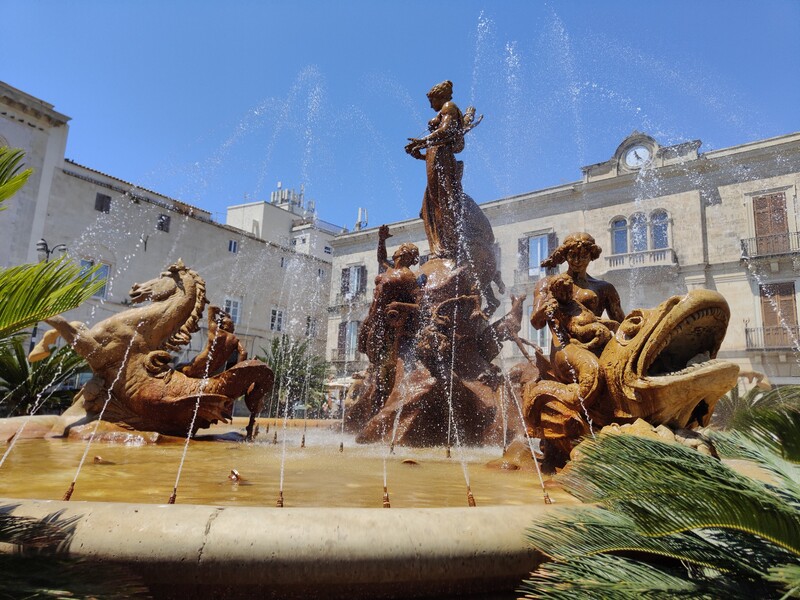
The Neapolis Archaeological Park deserves at least half a day. Don’t make the mistake of going in July at midday — the heat bouncing off the stone is no joke. Get there early.
- Greek Theatre (5th century BC) — still used for performances in summer
- Ear of Dionysius — an extraordinary limestone cave with acoustic properties
- Temple of Apollo — the oldest in Sicily
- Paolo Orsi Regional Archaeological Museum
- Pane cunzato from Ortigia market — flatbread loaded with anchovies and aged cheese
- Pasta con le sarde — pasta with sardines and wild fennel, a Sicilian classic
- Almond granita for breakfast — served the traditional way, with a brioche roll for dipping
Noto is Baroque, not Greek — I know. But bear with me: a short drive outside town you’ll find Noto Antica, the original city destroyed by the earthquake of 1693, where genuine Greek remains lie buried in woodland. It’s worth an hour on foot through the nature reserve. Then head down into the rebuilt city and let yourself be dazzled by that honey-coloured stone, which shifts shade by shade as the day progresses.

In the afternoon, make for Eloro — a Greek colony on the coast with almost no other tourists, just ruins and scrubland and a few standing columns. This is the kind of “minor” Greek Sicily I love most.
- Noto Antica — Greek ruins in the woodland reserve
- Eloro/Helorus — Syracusan colony right by the sea
- Corso Vittorio Emanuele at sunset — the whole street glows
- Villa Romana del Tellaro — Roman mosaics, 10 minutes away
- Avola almonds, toasted and sold loose — buy a bag, you won’t regret it
- Pistachio gelato from Caffè Sicilia — genuinely one of the best ice creams in Italy
- Mpanatigghi — Noto’s curious pastries filled with chocolate and minced meat
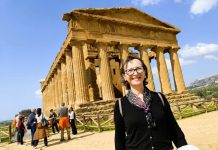
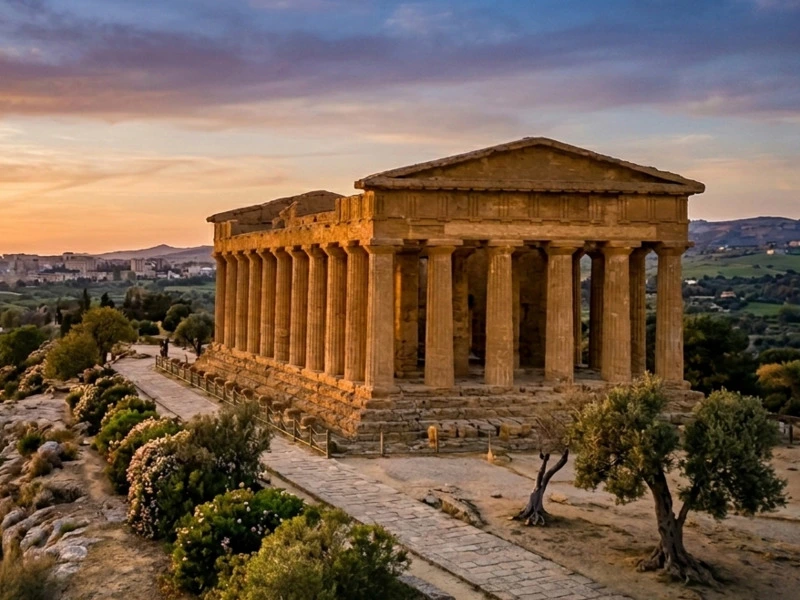
Few things move me as much as seeing the row of temples at Agrigento from below, backlit by the late afternoon sun. It is, without qualification, one of the most beautiful sights in the entire Mediterranean. I always time my arrival for sunset — the golden light on the limestone does something that no photograph has ever managed to capture properly.

Walk the Sacred Way from east to west: the Temple of Juno first, then Concordia (the best-preserved Doric temple in Italy), then the vast ruins of the Temple of Olympian Zeus, where fallen telamon statues — enormous carved figures once used as architectural supports — lie scattered on the ground. Allow at least three hours.
- Temple of Concordia — 5th century BC, remarkably intact
- Temple of Juno at golden hour
- Pietro Griffo Regional Archaeological Museum
- Giardino della Kolymbetra — a FAI-managed garden oasis between the temples
- Arancini — fried risotto balls with meat ragù (note: in Agrigento they use the masculine form)
- Caponata agrigentina — sweet-and-sour aubergine stew with olives, capers and dark chocolate
- Nero d’Avola — the island’s boldest red wine, produced just nearby
Selinunte will break your heart in the best possible way. This is the largest archaeological park in Europe — 200 acres of collapsed temples, vegetation-swallowed city blocks, and broken columns lying like fallen giants. Nowhere else gives me quite the same feeling of standing inside actual History, unmediated and unvarnished.
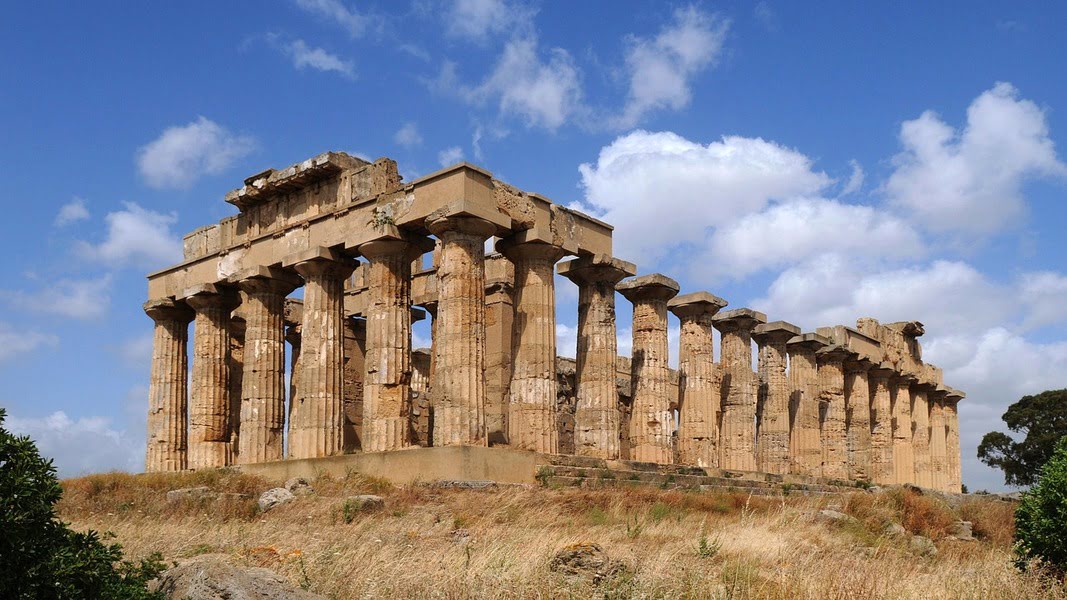
Temple E, re-erected in the 1950s, is genuinely impressive standing upright again — but I prefer wandering among the collapsed columns of Temples E, F and G with no particular plan. Give it time. Wear comfortable shoes. Don’t rush.
- Eastern Acropolis — the three temples E, F and G
- Western Acropolis — the ancient city’s core
- Cave di Cusa — the quarry where the columns were cut, left mid-work
- Baglio Florio — the on-site museum
- Squid and potatoes in fresh tomato — a staple of the nearby Trapani coast
- Castelvetrano bread — dark, soft, faintly nutty. Unlike any bread you’ll find elsewhere
- Nocellara del Belice olives — eat them here, fresh; the jarred version doesn’t compare
Segesta is an odd and beautiful place. The temple was never finished — the columns have no fluting, there’s no inner chamber — and yet it’s among the most photographed structures in Sicily. The theatre at the top of the hill commands a valley that, on a clear day, opens all the way to the sea. It’s the kind of place that makes you go quiet.

Worth noting for the historically curious: Segesta wasn’t strictly a Greek city. It belonged to the Elymians — a distinct people whose origins remain debated — and was in fact the long-standing rival of Selinunte. But its architecture is Greek in form, and its entanglement with the Greek world was constant. The complexity is part of what makes it so fascinating.
- Unfinished Doric temple (5th century BC) — standing alone in the valley
- Hellenistic theatre on the summit of Monte Barbaro
- Remains of the Elymian city and medieval mosque
- Trapanese pesto — made with almonds, tomato, basil and garlic. No Parmesan, no pine nuts
- Fish couscous — an Arab culinary tradition that never left western Sicily
- Cannolo — filled to order, always. Never the night before
Palermo isn’t a Greek city, but it brings the journey full circle — because it’s home to the Salinas Regional Archaeological Museum, where the metopes of Selinunte are displayed. These sculpted friezes once decorated the temple facades you walked through on Day 4. Seeing them up close, after visiting the sites in person, changes everything: you suddenly grasp the scale, the colour, the ambition of what the Greeks built here.

On the second day, give yourself a break from ancient stones. Spend the morning at the Ballarò street market — the most authentic in the city — and the afternoon grazing on street food. If you have energy to spare, make the short trip to Solunto, a Greco-Roman site on the headland 12 miles east, with views across the Gulf of Palermo that justify the drive on their own.
- Salinas Museum — the Selinunte metopes are unmissable
- Solunto — Hellenistic town on Monte Catalfano with sweeping sea views
- Ballarò Market — the real Palermo, not the tourist version
- Palatine Chapel & Cathedral — a Norman bonus well worth your time
- Pane ca meusa — fried spleen sandwich. Try it even if it frightens you
- Stigghiola — grilled lamb intestines, a Ballarò street food institution
- Sfincione — Palermo’s answer to pizza: thick, spongy, topped with onion and anchovies
- Proper cassata siciliana — not the factory version sold at motorway service stations
Practical Tips
What you learn from living here, distilled into a few honest lines.
🕐 When to Go
- April–June: the sweet spot. Warm but manageable, wildflowers everywhere
- September–October: a close second. Fewer crowds, sea still swimmable
- July–August: avoid the archaeological sites at midday — the heat is genuinely punishing
- Winter: atmospheric, but some sites reduce their opening hours
🚗 Getting Around
- A hire car is essential — Selinunte and Segesta are unreachable by public transport
- Always park outside historic centres and walk in — it’s less stressful and often free
- Syracuse to Noto works well by train: slow, scenic and perfectly pleasant
- GPS is useful, but trust the brown tourist road signs too
🎟 Tickets & Opening Times
- Book online for the Valley of the Temples and Syracuse in peak season
- Most sites open at 9am — arrive at 8:45 and you’ll have them to yourself
- First Sunday of the month: many state-run sites are free of charge
- Bring water — drinking fountains on site are unreliable
👟 What to Pack
- Lightweight walking shoes with ankle support — the terrain is uneven throughout
- A wide-brimmed hat: non-negotiable from May onwards
- High-factor sun cream — the pale stone reflects heat and you’ll burn faster than you expect
- A reusable water bottle — saves money and the inevitable plastic guilt
🍋 Eating Well
- Eat where locals eat — if there’s a laminated tourist menu on display, keep walking
- Granita is a breakfast food here: order it with a brioche roll and dip as you go
- The morning markets are where the real food experience happens
- Tap water in Sicily is excellent — use it and skip the plastic bottles
📚 Before You Leave Home
- Read even 50 pages on Magna Graecia before you go — it transforms everything you see
- Download the Sicilian regional archaeological parks app
- Check the INDA website for summer performances at the Greek Theatre in Syracuse
- Book accommodation well ahead if you’re travelling in May or June
“Greek Sicily doesn’t belong to the past. It lives in the way the sunset still falls on those stones — just as it did two thousand years ago.”
Photo Selinunte by pixabay.com