What to Know Before
Travelling to Sicily
A first-timer’s guide: language, transport, climate, customs, FAQs and tips from someone who lives here.
What we cover
The first time you arrive in Sicily, you get the distinct feeling you’ve landed somewhere that resembles nowhere else. There’s something older and more layered about it. This is an island that absorbed Greeks, Arabs, Normans, Spaniards and Bourbons, and borrowed something from each of them without forgetting a thing.
This guide is for first-timers. It’s not a list of monuments — guidebooks handle that perfectly well. This is what you learn from actually living here, straight from a Sicilian: the things no one tells you at check-in, but that make the difference between an ordinary holiday and an experience you’ll be talking about for years.
 Ballarò Market, Palermo – photo PW
Italian is the language of Sicily, but the Sicilian dialect is very much alive, widely spoken, and at times utterly impenetrable to the uninitiated. At the market, among older locals, in village bars, Sicilian asserts itself with real force. Don’t worry though: in any tourist, commercial or urban context you’ll have no trouble finding people who speak standard Italian.
English is spoken to a reasonable standard at hotels and accommodation in the main cities and the busier tourist areas. In rural villages and inland towns it’s considerably rarer. That said, learning even a handful of words in Sicilian dialect is the fastest way to open any door.
- Hello / Good morning – “Ciau” (hi), “Bongiornu” (good morning)
- Thank you – “Grazii” or “Aviti” (roughly: go ahead / you’re welcome)
- Good / Delicious – “Bonu” (perfect for complimenting food)
- You’re welcome / Don’t mention it – “Figùrati” or “S’accomodi”
- How are you? – “Comu stai?” / “Tuttu beni?”
- Beautiful – “Beddu/Bedda” (masculine/feminine)
- Sicilians gesticulate a great deal — it’s communication, not agitation
- A sharp upward chin-tilt means “no” — a distinctly Sicilian gesture
- Smiling and showing genuine curiosity opens any conversation
- Google Translate works well as a backup
- In the main cities many menus are available in English
- Younger Sicilians almost always speak decent English
Sicily’s climate is Mediterranean, but far from uniform. The coast is quite different from the interior; the eastern side (dominated by Etna) differs markedly from the west; the north from the south. In summer it’s hot everywhere — a dry, piercing heat, nothing like the sticky humidity of northern Italy. In winter the coasts remain mild, but mountainous areas such as the Madonie or Nebrodi can see snow.
The sweet spot is June or September: the sea is still warm from July and August, the crowds thin out, prices drop, and the afternoon light is every photographer’s favourite. For a cultural trip, any time works well apart from January and February, which are the coldest months.
- Summer: ultra-light clothing, a sun hat, high-factor sunscreen
- Spring/Autumn: a mid-layer for cooler evenings
- Winter on the coast: a light jacket — rarely bitterly cold
- Inland/mountains: layers and waterproof footwear
- For archaeological sites: comfortable shoes, year-round
- The Scirocco: a hot wind from the Sahara that makes the heat unbearable
- Midday in summer (1–4pm): avoid open-air sites during these hours
- Sunlight bouncing off white stone burns faster than you’d expect
- Tap water is safe to drink almost everywhere
- In the mountains in winter, proper cold-weather gear is essential
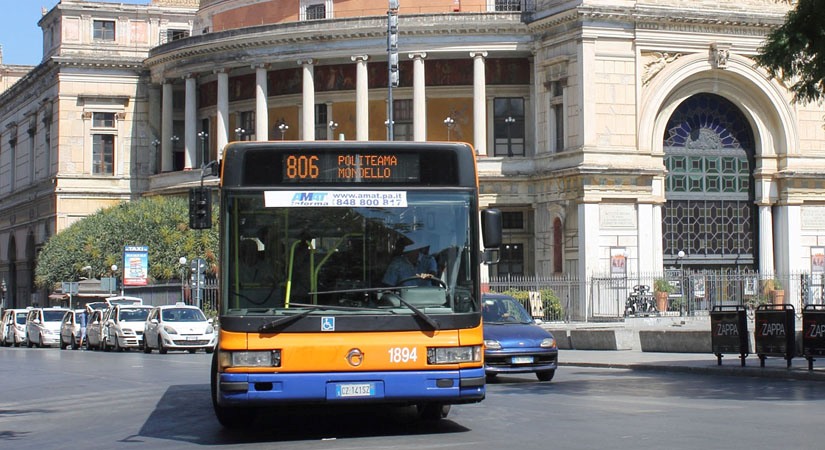 Getting around Sicily
Here’s the honest truth about Sicilian transport: a hire car is almost always necessary if you want to genuinely explore the island. Trains connect the main coastal cities fairly well, but the interior — where some of the most extraordinary places are — is virtually unreachable without your own wheels. Pick up a rental car as soon as you arrive.
To reach Sicily you have two main airports: Falcone-Borsellino in Palermo and Fontanarossa in Catania. There are also ferry services from Naples, Genoa, Civitavecchia, and from Reggio Calabria (a 20-minute crossing of the Strait of Messina).
- Palermo: Falcone-Borsellino Airport (PMO) — connected to the city centre by train or bus
- Catania: Fontanarossa Airport (CTA) — taxi or bus into the centre
- Trapani: Vincenzo Florio Airport — smaller, mainly seasonal flights
- Direct flights from across Europe; budget carriers very active
- Palermo–Catania: approx. 2h 45m, frequent service
- Palermo–Messina: approx. 3h, scenic north coast route
- Palermo–Cefalù: under 1 hour, an excellent option
- Catania–Syracuse: approx. 1h 20m
- Trenitalia and Intercity: book ahead in summer
- Essential for the interior and lesser-known sites
- Roads are often narrow: a compact car is recommended
- Palermo and Catania traffic can be chaotic — brace yourself
- ZTL restricted zones in historic centres: always check with your hotel
- Paid parking in the main cities
 Street food in Palermo – photo depositphotos.com
Sicilian cuisine is one of the most extraordinary things about the island, and one of the aspects that most surprises visitors. It isn’t purely a restaurant culture — though there are excellent restaurants — it’s also a street food culture, a market culture, a tradition of families cooking with what’s to hand. Millennia-old in its ingredients (pistachio, almonds, fennel, capers, raisins) and Arab in its spices (cinnamon, saffron, cumin used in sweet dishes).
The food changes dramatically from province to province. The arancini of Palermo are not the same as those in Catania. The fish of Trapani is nothing like that of Messina. Modica chocolate exists nowhere else on earth. Eat local, eat seasonal, eat where the Sicilians eat.
- Arancino/arancina – fried stuffed rice ball (masculine in Catania, feminine in Palermo)
- Granita with brioche col tuppo – the quintessential Sicilian breakfast
- Pasta alla Norma (Catania), con le sarde (Palermo), al pesto trapanese
- Cannolo filled to order — never one with day-old ricotta
- Modica chocolate — raw, no cocoa butter, ancient and utterly unique
- Caponata — sweet-and-sour aubergine with capers, olives and celery
- Pane ca meusa (Palermo) — fried spleen sandwich. Try it even if it sounds alarming
- The historic markets (Ballarò, Vucciria, Capo) are the real Sicilian canteen
- If there’s a “tourist menu” displayed outside, walk on
- Sicilian bars open at 6–7am: breakfast is a serious matter
- Lunch is between 1pm and 3pm; dinner after 8pm (often after 9pm)
- Tap water is good almost everywhere — use it
- Local wine (Nero d’Avola, Grillo, Catarratto) is excellent and well-priced
Sicilians are hospitable in a way that can disorient visitors from northern Europe — a concrete, physical hospitality expressed through food offered, doors left open and time given without any calculation. If someone offers you something to eat or drink, always accept at least the first time. Declining is a minor but genuine slight.
The rhythm here is different. Towns wake slowly, come to life mid-morning, go quiet in the afternoon, then erupt again in the evening. Sicilian nightlife begins after 10pm. Don’t expect everything to run with Swiss precision, and don’t mistake that for a flaw.
In Sicily, time operates differently. It’s not about slowness — it’s a different relationship with priorities altogether. Once you adjust to it, going back feels oddly difficult.
- In churches: shoulders and knees must be covered — no exceptions
- Don’t photograph people without asking first
- Greet the shopkeeper when you enter and leave — it’s basic courtesy
- Don’t eat while walking through residential areas
- Haggling at the market is normal; in shops it is not
- Noise at night is not well tolerated in residential streets
- The evening passeggiata (stroll) is a genuine social institution
- Patron saints’ festivals are real community events, not tourist folklore
- Family remains the centre of social life
- Coffee is drunk standing at the bar, quickly, preferably espresso
- The “cuntu” — storytelling — is an everyday art form
- Sicilians give directions generously, but not always accurately
Sicily is generally cheaper than Rome, Milan or Venice, and considerably cheaper than most comparable Mediterranean destinations in Greece or Spain. That said, prices vary considerably: the most popular tourist areas in high season can be pricey, while a few kilometres away you’ll find everything at half the cost.
Cash still matters. Many small restaurants, bars, markets and village shops accept cash only. Always carry some smaller notes: Sicilians are notoriously reluctant to break a €50 note.
- Coffee at a bar: €1.20–1.50
- Granita with brioche: €2.50–4.00
- Arancina: €2.00–3.50
- Lunch at a local trattoria: €12–18
- Dinner at a mid-range restaurant: €25–40
- Entry to an archaeological site: €6–15
- B&B per night (outside the cities): €50–90
- Euro (€) — the official currency
- Cards accepted in cities; less so in smaller towns
- Markets, village bars, street stalls: cash only
- ATMs (Bancomat/Postamat) available throughout the island
- Tips: not obligatory, but appreciated (€1–2)
- First Sunday of the month: many state museums are free
- Stay in B&Bs or agriturismi outside the main cities
- Eat at the market at lunchtime — cheap and genuinely authentic
- Avoid July–August for the highest prices
- Book ferries and trains well in advance
- Regional state museums: the combined ticket offers good value
Some things you only learn from living in Sicily, or from coming back many times. They’re small observations that require a bit of attention. I’m sharing them because they can make the difference between a good trip and a truly exceptional one.
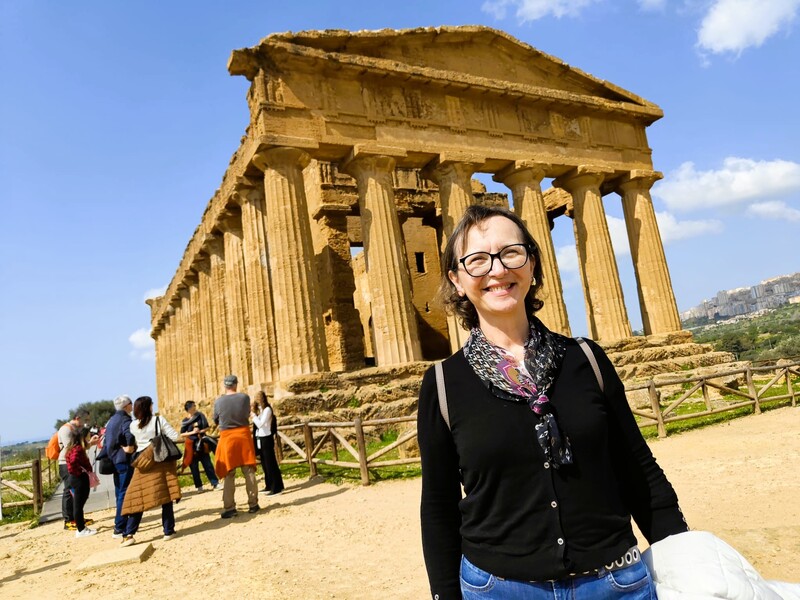
- Book the main sites online in summer — the Valley of the Temples, the Greek Theatre in Syracuse and Taormina fill up fast
- Start early at open-air sites: before 9am it’s a completely different experience
- The morning market is the real local breakfast — far more authentic than any tourist-facing bar
- Ask your B&B hosts for their favourite spots; they rarely steer you wrong
- Don’t underestimate inland Sicily: Enna, Caltagirone, Piazza Armerina and Gangi are all worth the detour
- Drive slowly on provincial roads — bends always arrive sooner than expected
- Don’t eat international food in Sicily — eat local, and for a quick bite trust what Sicilians love (sfincione, pane cunzato, arancina, rosticceria)
- Don’t expect strict punctuality — build flexibility into your schedule
- Don’t visit Taormina only in August — it’s always beautiful, but impossibly overcrowded
- Don’t buy souvenirs at site entrances — they cost twice as much and are identical everywhere
- Never leave anything of value visible in a parked car, especially in urban areas
- Don’t enter churches with bare shoulders — you may be turned away at the door
- Caltabellotta (AG) — a village clinging to the rock at 1,000 metres, almost uninhabited and utterly spectacular
- Palazzo Adriano (PA) — the village from Cinema Paradiso, unchanged since filming
- Petralia Soprana (PA) — the highest village in the Madonie, medieval and perfectly intact
- Scicli (RG) — lovelier than Ragusa and far less crowded; a backdrop for the Montalbano TV series
- Tusa (ME) — a small village with a contemporary art museum on the seabed
- Marzamemi (SR) — a fishermen’s village in the Syracuse area, one of the most beautiful on the coast
- Pantelleria — not Sicily in the conventional sense, but an island that takes your breath away
Before you go — the checklist
Things to do, book and pack. In the right order.
📋 Do this in advance
- Book flights and accommodation early, especially in summer
- Hire a car online — it’s considerably cheaper than on arrival
- Check opening hours for the sites you want to visit (they change seasonally)
- First Sunday of the month? Many state museums are free
- Download the Trenitalia app and buy train tickets in advance
🎒 What to bring
- Comfortable shoes with sturdy soles — essential for archaeological sites
- High-factor sun cream from June to September
- Cash in small denominations (€5, €10, €20 notes)
- Plug adaptor for Italian sockets (Type F / Type L)
- A reusable water bottle: tap water is perfectly safe
📱 Useful apps and resources
- Trenitalia — live train tickets
- Google Maps — works well offline if you download the map in advance
- Sicilia Beni Culturali (Regional Authority) — site hours and information
- AMAT Palermo / AMT Catania — urban bus routes
- Meteo.it — reliable local weather forecasts
🏥 Health and safety
- European Health Insurance Card (EHIC) for EU citizens; travel insurance for others
- Pharmacy: look for the green cross sign — open nights on a rota basis
- Emergency services: pan-European number 112
- Watch out for dehydration in summer: drink plenty of water
- Some rocky coves have no emergency services nearby — exercise caution
🌿 Respecting the environment
- Do not pick flowers, plants or rocks in nature reserves
- Smoking is banned on equipped beaches
- Don’t leave litter — Sicily’s natural areas already suffer from this
- Photography at UNESCO sites: respect any stated restrictions
- Buy directly from local producers whenever possible
📚 To understand Sicily better
- The Leopard by Tomasi di Lampedusa — the definitive Sicilian novel
- The Inspector Montalbano series (Camilleri) — an authentic portrait of everyday Sicily
- Films: Cinema Paradiso, Il Postino, Stromboli
- Podcast: “Sicilia in Podcast” for in-depth historical and cultural insight
“Sicily isn’t somewhere you visit. It’s somewhere you live, in the best possible sense of the word. Arrive without expectations and go home carrying something you don’t quite have the words for.”